Buying Guide
Best Kayaks for Fishing, Touring & Recreation (2026)
Updated March 2026 · 9 min read
A kayak is one of the most personal pieces of gear you'll ever buy. Unlike a tent or sleeping bag, which can serve you adequately across most conditions, a kayak is purpose-built — the right boat for flatwater fishing is completely wrong for open-water touring, and neither is ideal for whitewater. Getting the choice right means years of enjoyable paddling; getting it wrong means an expensive lesson sitting in storage.
At the $600 to $1,500 price range that represents the heart of the recreational and fishing kayak market, you're making a multi-year investment. These boats hold their value reasonably well when maintained, which means the choice deserves careful consideration. The good news: the variety in today's market means there's a genuinely excellent option for every paddler type, from the weekend lake angler to the coastal tourer doing multi-day expeditions.
This guide covers the major categories, explains the key specs that determine on-water performance, and calls out what actually matters versus what's marketing copy. By the end, you'll know exactly which type of kayak fits your paddling style — and why.
Types of Kayaks
Sit-on-Top vs. Sit-In
Sit-on-top (SOT) kayaks have an open deck with a molded seat on top — you sit above the hull rather than inside a cockpit. They're self-bailing, virtually impossible to swamp, and dramatically easier to re-enter after a capsize. This makes them the dominant choice for fishing, recreational flatwater, and warm-weather paddling. Sit-in kayaks enclose the paddler in a cockpit, offering a lower center of gravity, better performance in wind and chop, and a drier experience in cold or rough conditions. Touring and sea kayaks are almost exclusively sit-in designs. If you're paddling in summer on calm lakes or slow rivers, sit-on-top. If you're doing coastal touring in cooler climates, sit-in.
Fishing Kayaks
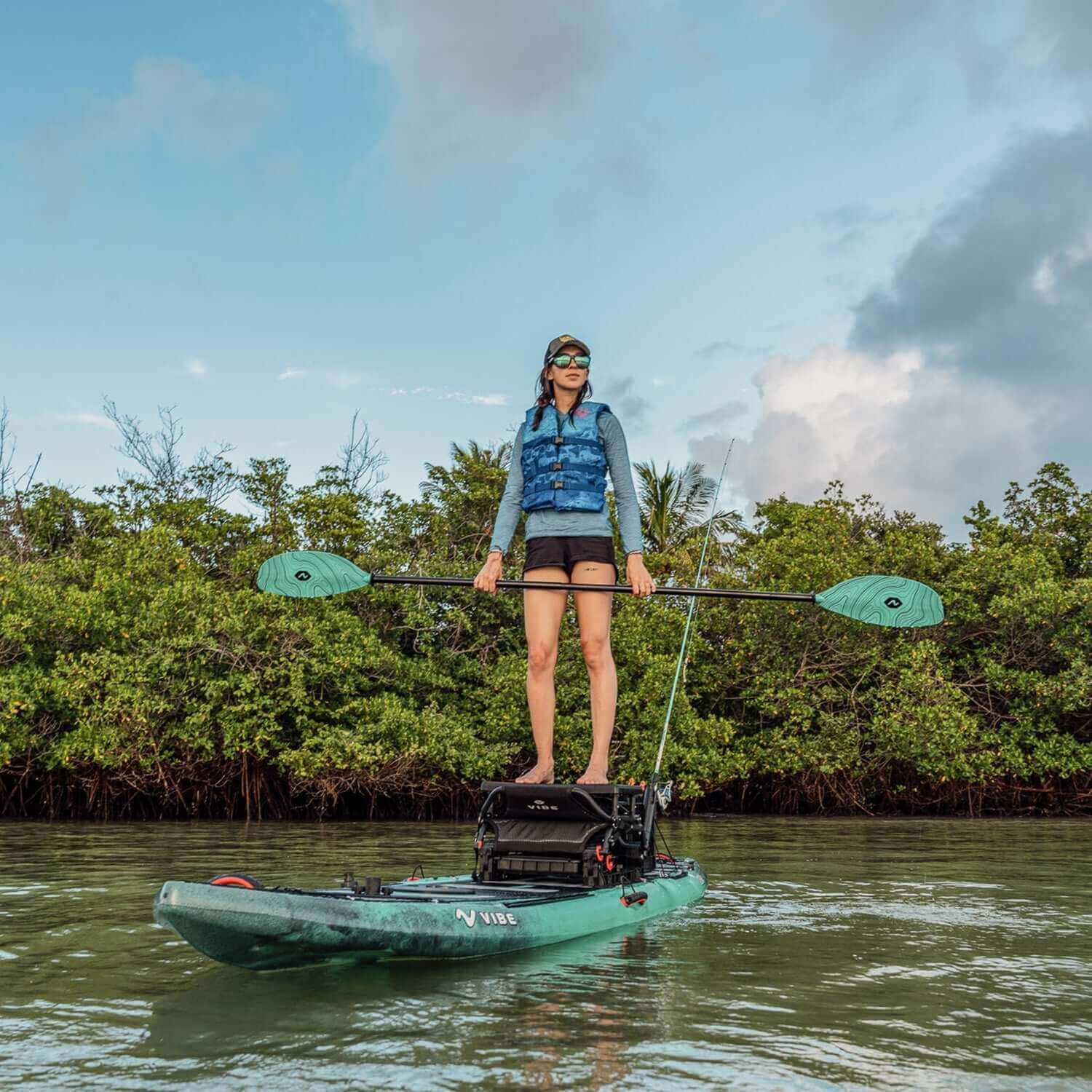
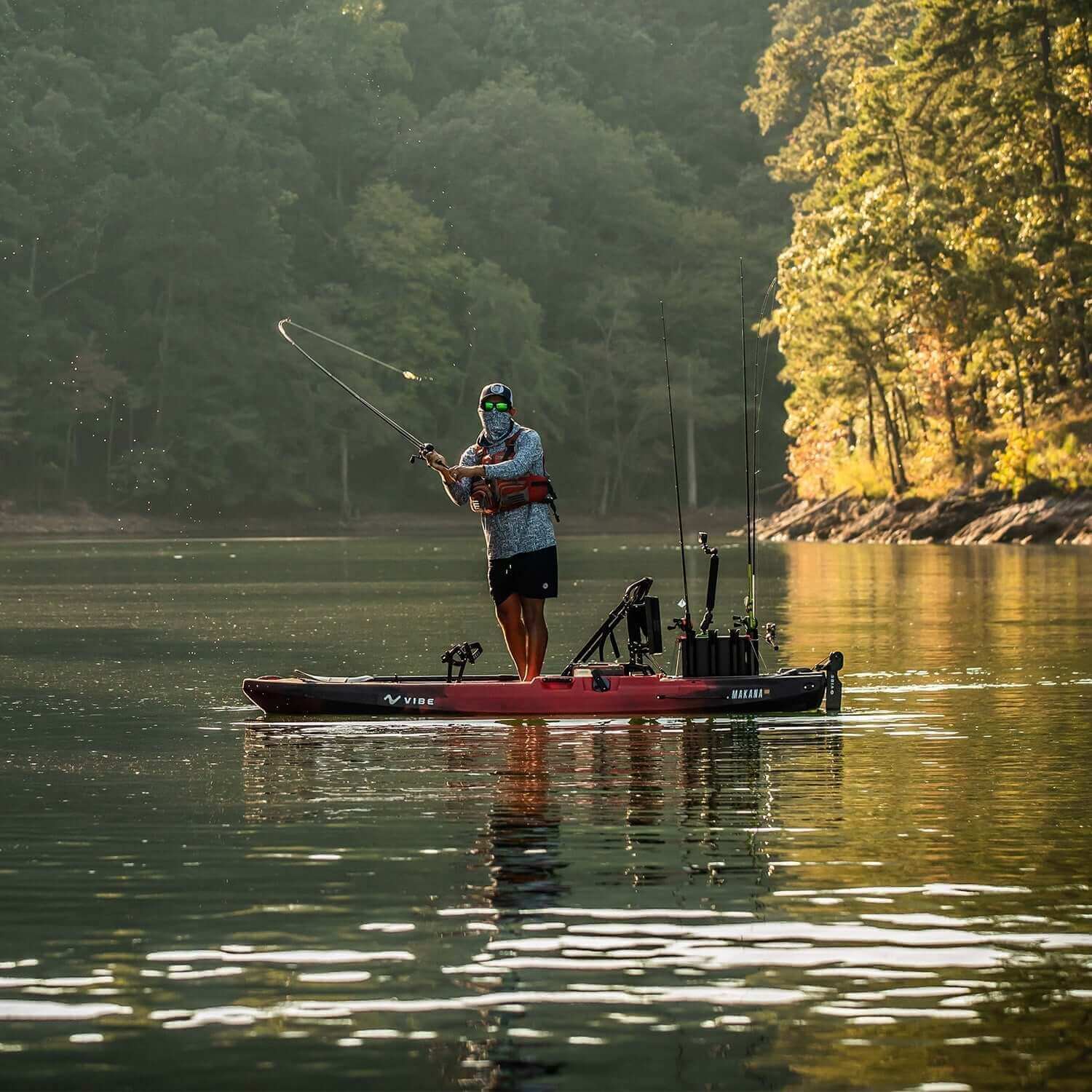
Built wide (32–36 inches) for primary stability — you can stand and cast without white-knuckling the gunwales. Key features: molded rod holders, tackle storage, anchor trolley systems, and flush mounts for fish finders. Many pedal-drive fishing kayaks have entered the market at the $1,200+ range, allowing hands-free propulsion for casting and landing fish. These are sit-on-top designs almost universally.
Touring Kayaks
Longer (14–18 feet), narrower, and designed for efficiency over distance. Sealed bulkheads create waterproof storage hatches for multi-day gear. Touring kayaks track (hold a straight line) exceptionally well and are significantly faster than recreational designs — but they require more skill to handle in rough conditions. For anyone planning coastal routes or river expeditions beyond day trips, a touring kayak is worth the steeper learning curve.
Recreational Kayaks
Shorter (8–12 feet), wider, and focused on ease of use over performance. Highly maneuverable on tight rivers and small lakes. These are the best entry-level option and the right choice for anyone who paddles infrequently or prioritizes ease of transport and storage.
Inflatable vs. Hardshell
Modern drop-stitch inflatable kayaks have closed the gap with hardshell performance significantly. A quality inflatable can be stored in a duffel bag, fits in a car trunk instead of requiring a roof rack, and is remarkably rigid when properly inflated. The tradeoff is setup time (10–15 minutes), slightly less tracking performance, and susceptibility to puncture in rocky environments. For paddlers with limited storage space or who fly to their put-ins, a premium inflatable is a genuinely viable choice.
What to Look For
Length, Width, and Stability
Wider kayaks have more primary stability (resistance to initial tipping) — essential for fishing and beginners. Longer kayaks have more secondary stability (resistance to fully capsizing once on edge), track better, and go faster. A 10-foot recreational kayak at 30 inches wide is ideal for calm flatwater day trips. A 12-foot fishing kayak at 33 inches provides the standing stability serious anglers need. A 16-foot tourer at 22 inches requires technique but covers water efficiently.
Weight Capacity
Always account for paddler weight plus gear. A kayak rated for 300 lbs with a 180 lb paddler leaves only 120 lbs for tackle, camping gear, food, and water — which fills up fast on overnight trips. Running a kayak near its rated maximum degrades performance significantly (slower, less stable, takes on water over the bow). For multi-day trips, look for capacity 100 lbs above your realistic loaded weight.
Material
Most recreational and fishing kayaks are high-density polyethylene (HDPE) — durable, impact-resistant, UV-stabilized, and affordable. It's the right choice for the vast majority of paddlers. Composite materials (fiberglass, carbon fiber) are lighter and stiffer, improving performance meaningfully, but cost significantly more and are less forgiving of hard landings on rocky shores. For casual to intermediate paddlers, HDPE is the practical choice.
Seat Comfort
Seat quality is consistently the most underrated spec. An uncomfortable seat turns a three-hour paddle into a miserable experience. Look for seats with adjustable back support, adequate padding, and breathable material. High-backed seats are important for paddlers with lower back issues. If you're buying a fishing kayak for all-day sit sessions, consider trying the seat before purchase or reading reviews that specifically address comfort over extended use.
Storage and Tracking
Sealed hatches provide dry storage for valuables and camping gear. Bungee deck rigging lets you secure bulkier items on the front or rear deck. For multi-day trips, sealed bulkheads are essential — they also provide buoyancy if the boat takes on water. Tracking rudder and skeg systems are worth the added cost on longer boats and coastal routes where crosswind drift becomes an issue on extended paddles.
Our Top Kayak Picks
Every kayak below ships free and is in stock for fast delivery. Click any product to see full specifications, weight capacity, and detailed dimensions.
 Water Sports
Vibe Kayaks
Vibe Kayak Cubera 120 Hybrid
Free Shipping
 Water Sports
Vibe Kayaks
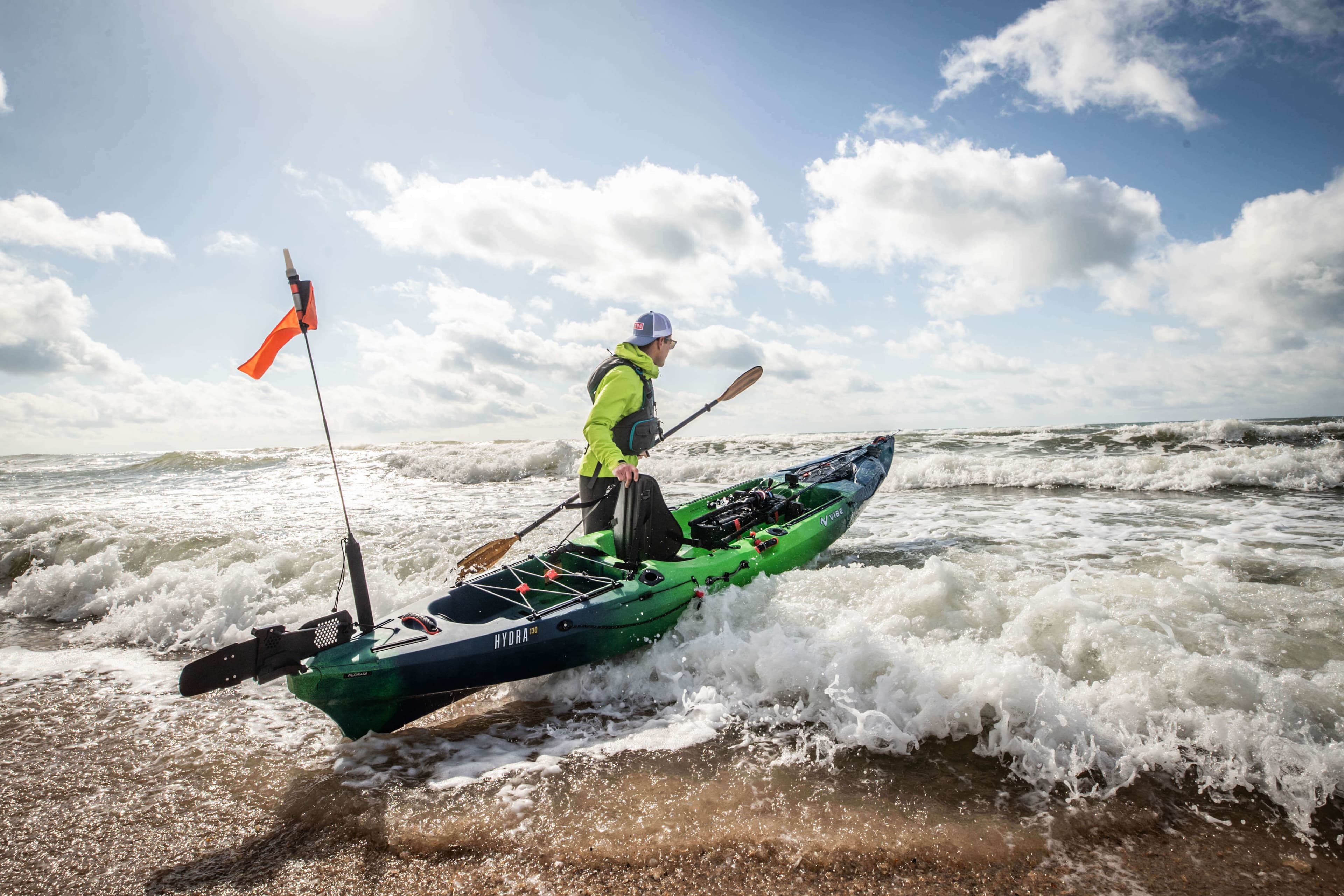
Vibe Kayak Hydra 130
Free Shipping
 Water Sports
Vibe Kayaks
Vibe Kayak Makana 100
Free Shipping
 Water Sports
Vibe Kayaks
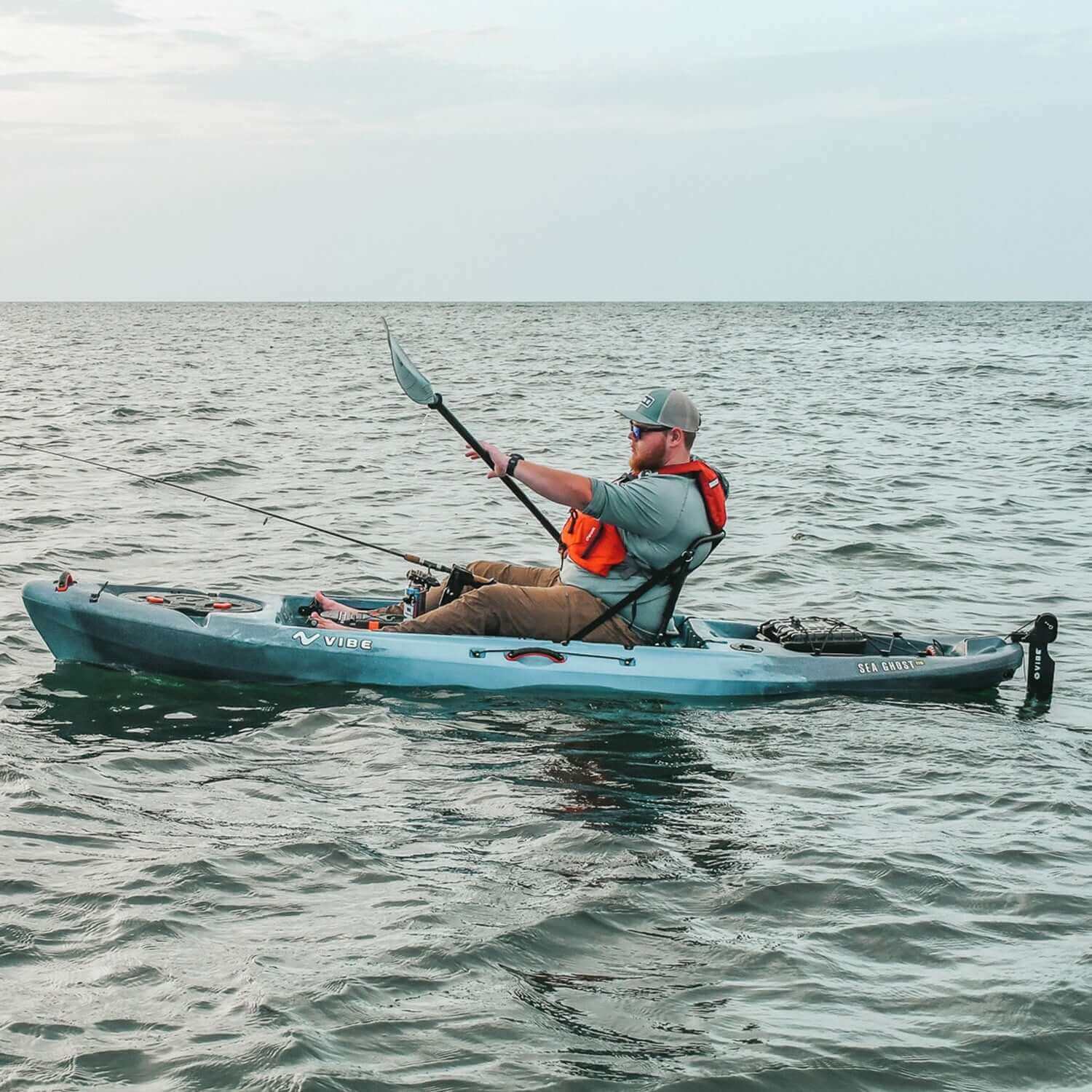
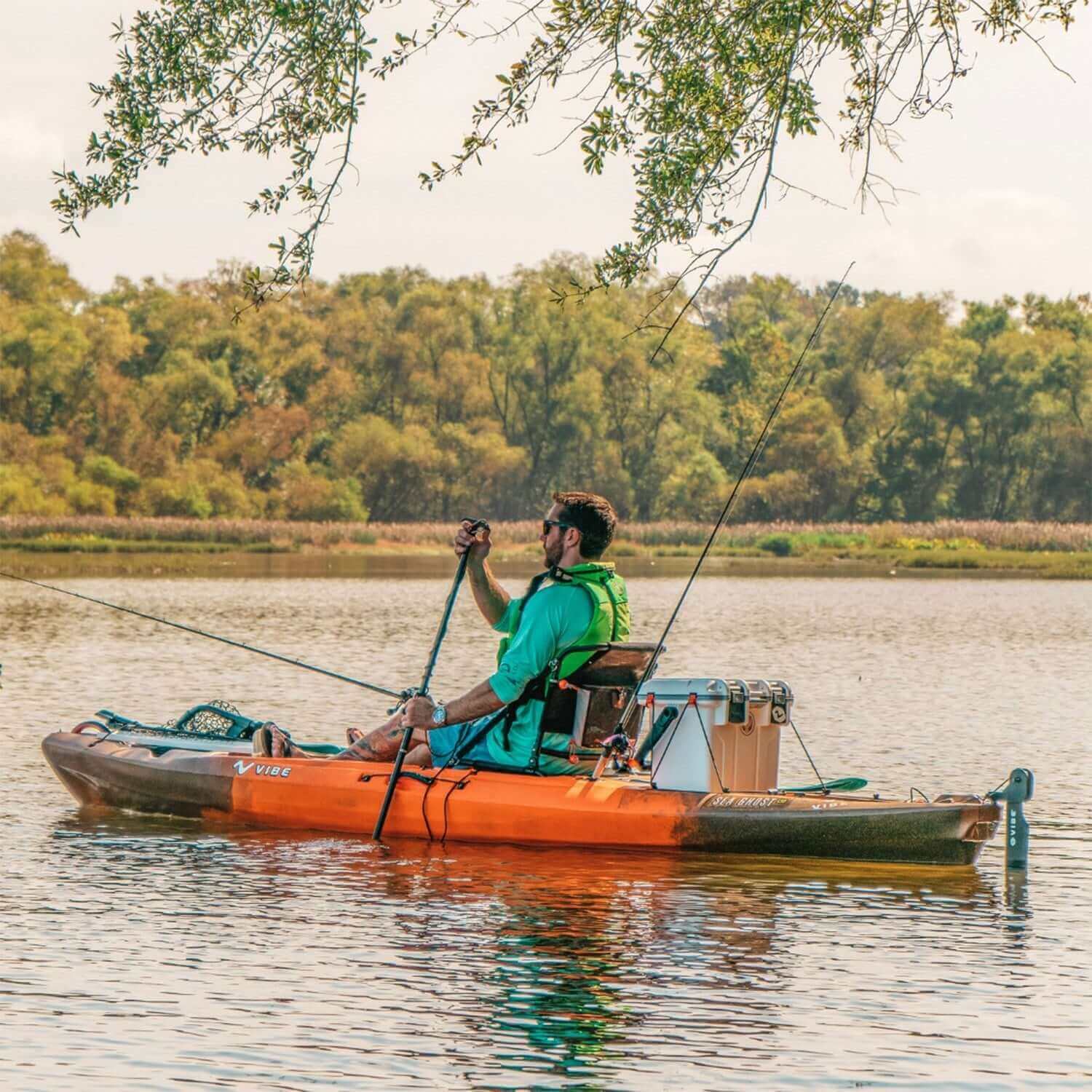
Vibe Kayak Sea Ghost 110
Free Shipping
 Water Sports
Vibe Kayaks
Vibe Kayak Sea Ghost 130
Free Shipping
 Water Sports
Vibe Kayaks
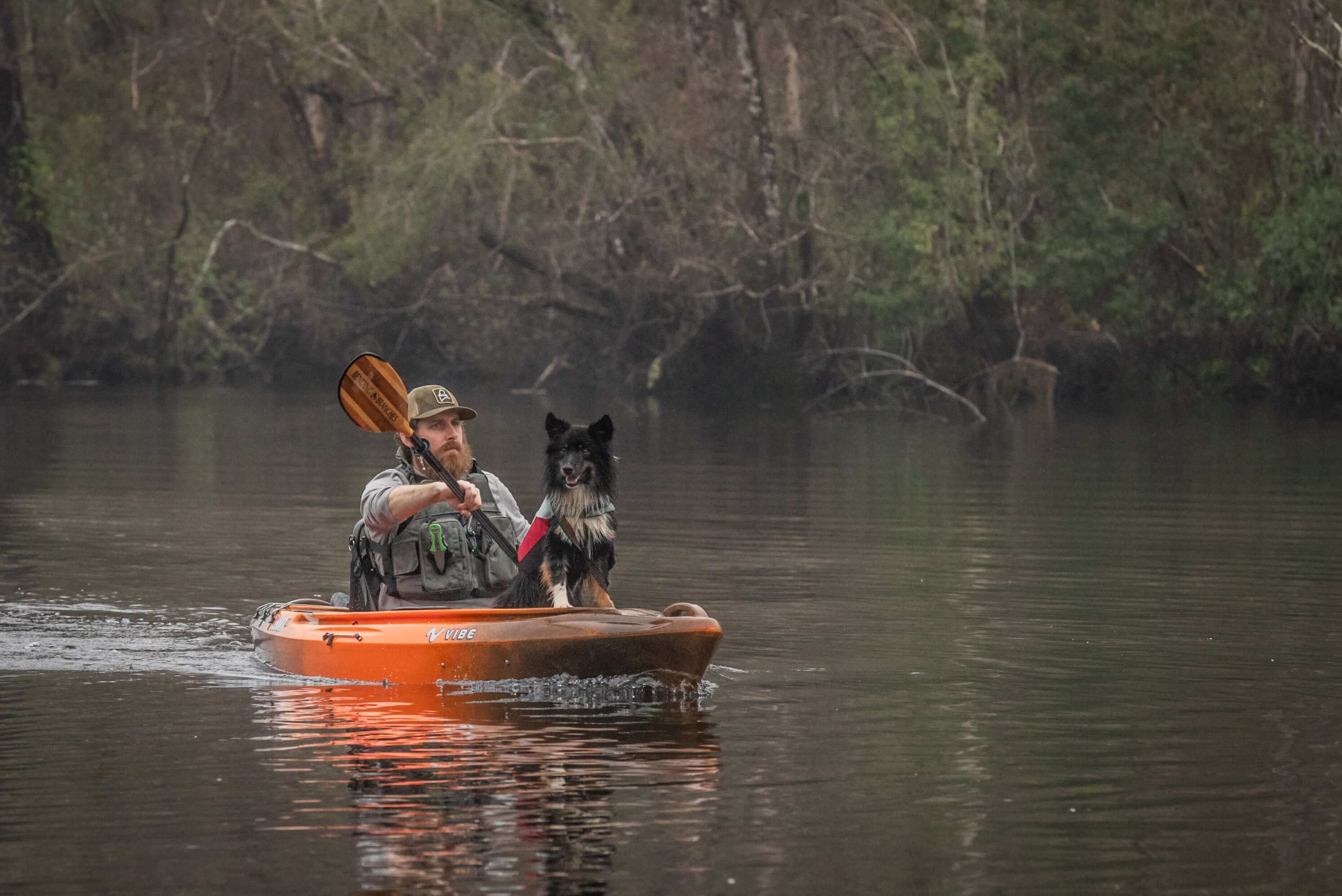
Vibe Kayak Shaka 100
Free Shipping
Kayak Care and Storage Tips
UV degradation is the biggest enemy of polyethylene kayaks. Apply 303 Aerospace Protectant or a comparable UV protectant two to three times per season if the boat lives outside. A cockpit cover keeps rain, debris, and rodents out during storage.
Store kayaks off the ground — either on wall-mounted J-hooks, a freestanding rack, or padded sawhorses — to prevent hull deformation from point loading over time. Store on the hull or on the side, not inverted, which can cause oil-canning on softer polyethylene hulls. After saltwater use, rinse the entire boat with fresh water, paying attention to the footrest tracks, seat hardware, and any metal fittings to prevent corrosion.
Get 10% off your first order
Join the Outpost Gears crew.
Ready to Hit the Water?
Browse our full selection of kayaks, paddles, and paddling accessories — with free shipping on every order.
Shop All Water Sports Gear